What's New in CFDEM®coupling 7.0.0?
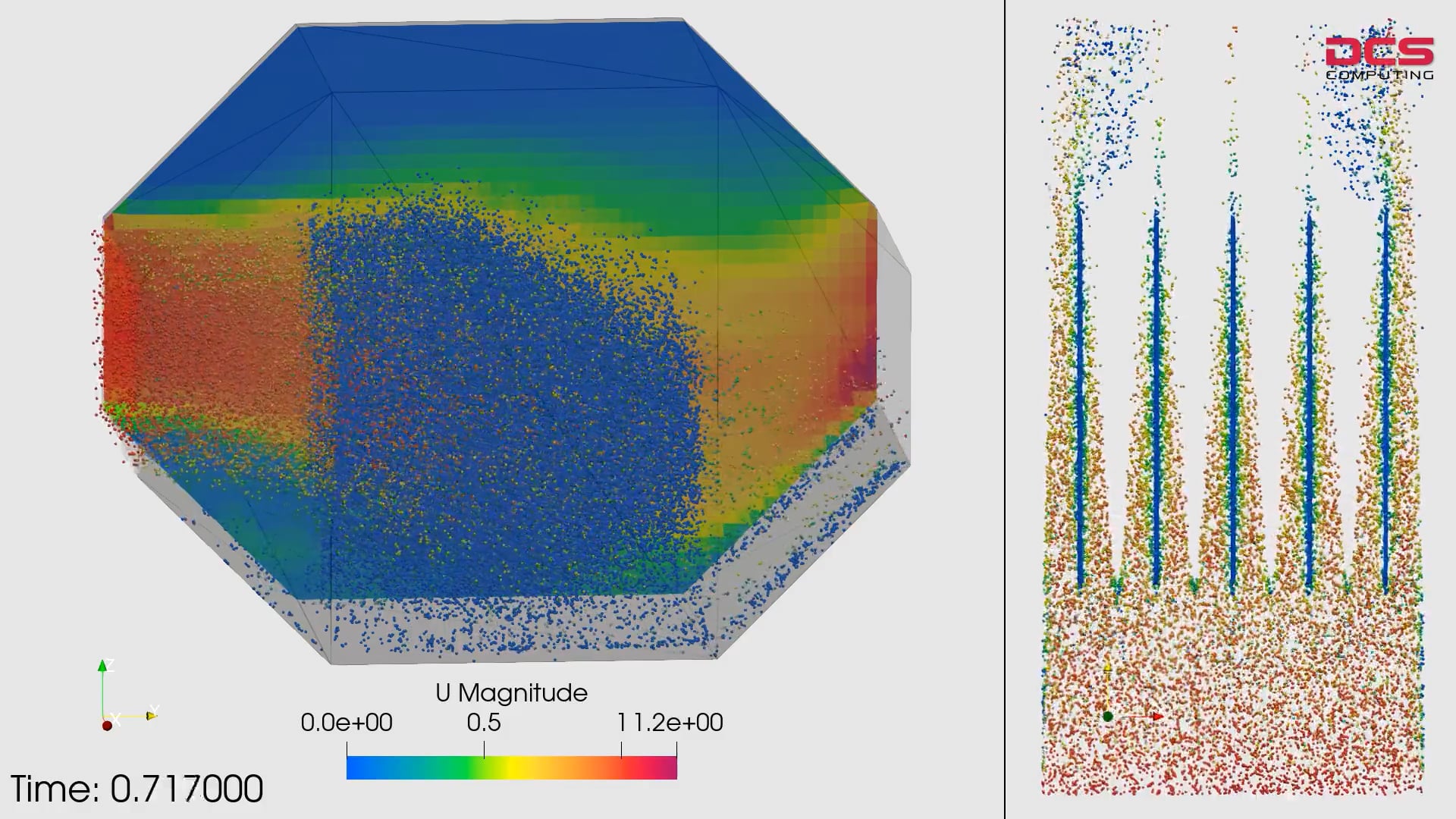
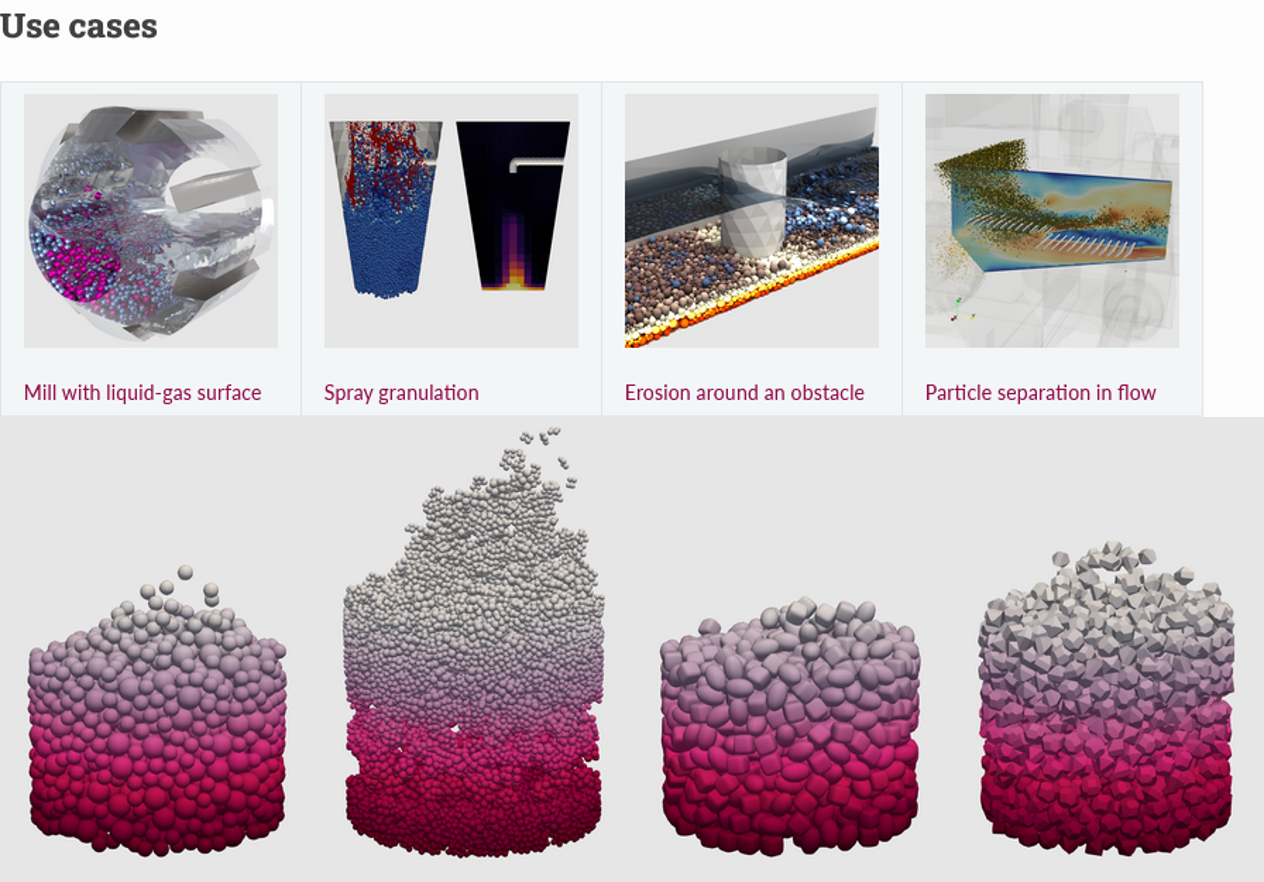
CFDEM®coupling 7.0.0 release highlights: reworked tutorials and documentation, new validation and use cases, and coarsegraining support for all force models.
Applied DEM and CFD-DEM projects and release highlights, written by the engineers who develop Aspherix® and CFDEM®coupling.
CFDEM®coupling 7.0.0 release highlights: reworked tutorials and documentation, new validation and use cases, and coarsegraining support for all force models.
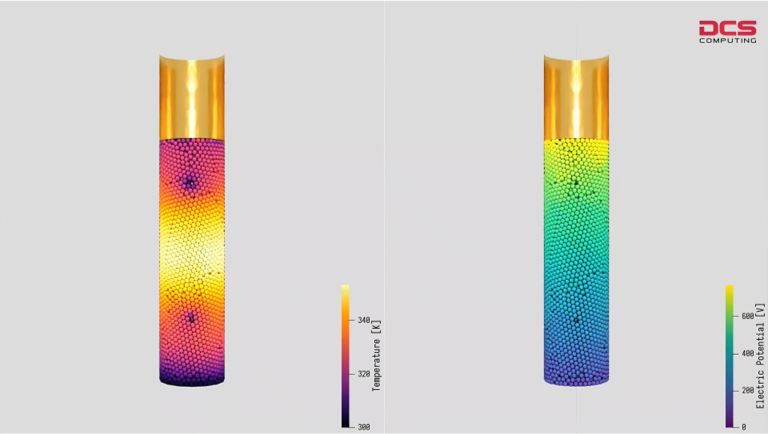
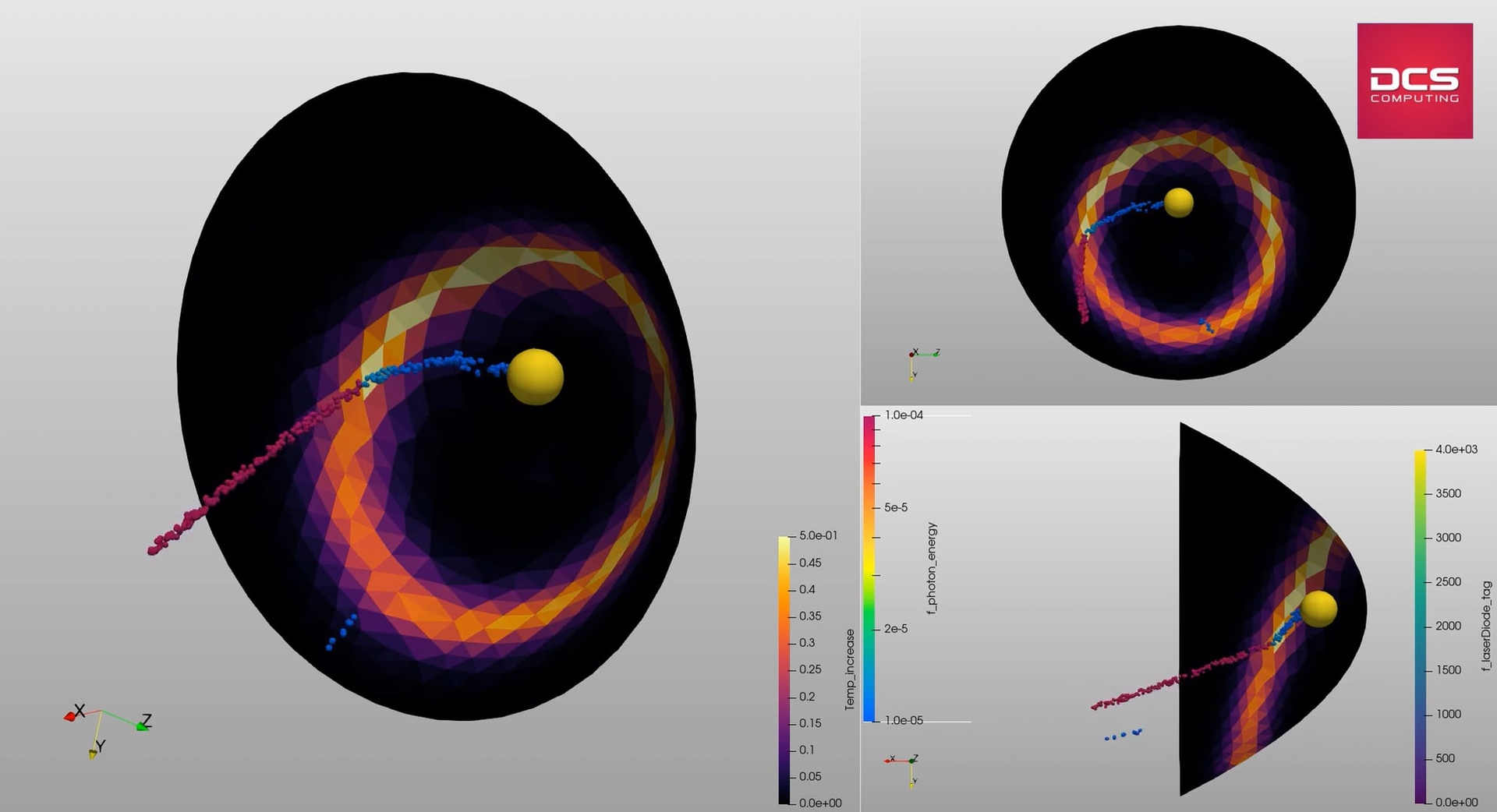
Aspherix® 7.0.0 release highlights: a new GPU mode on Linux, the Roessler-Katterfeld combined wear model, and ohmic heating with nonspherical particles.
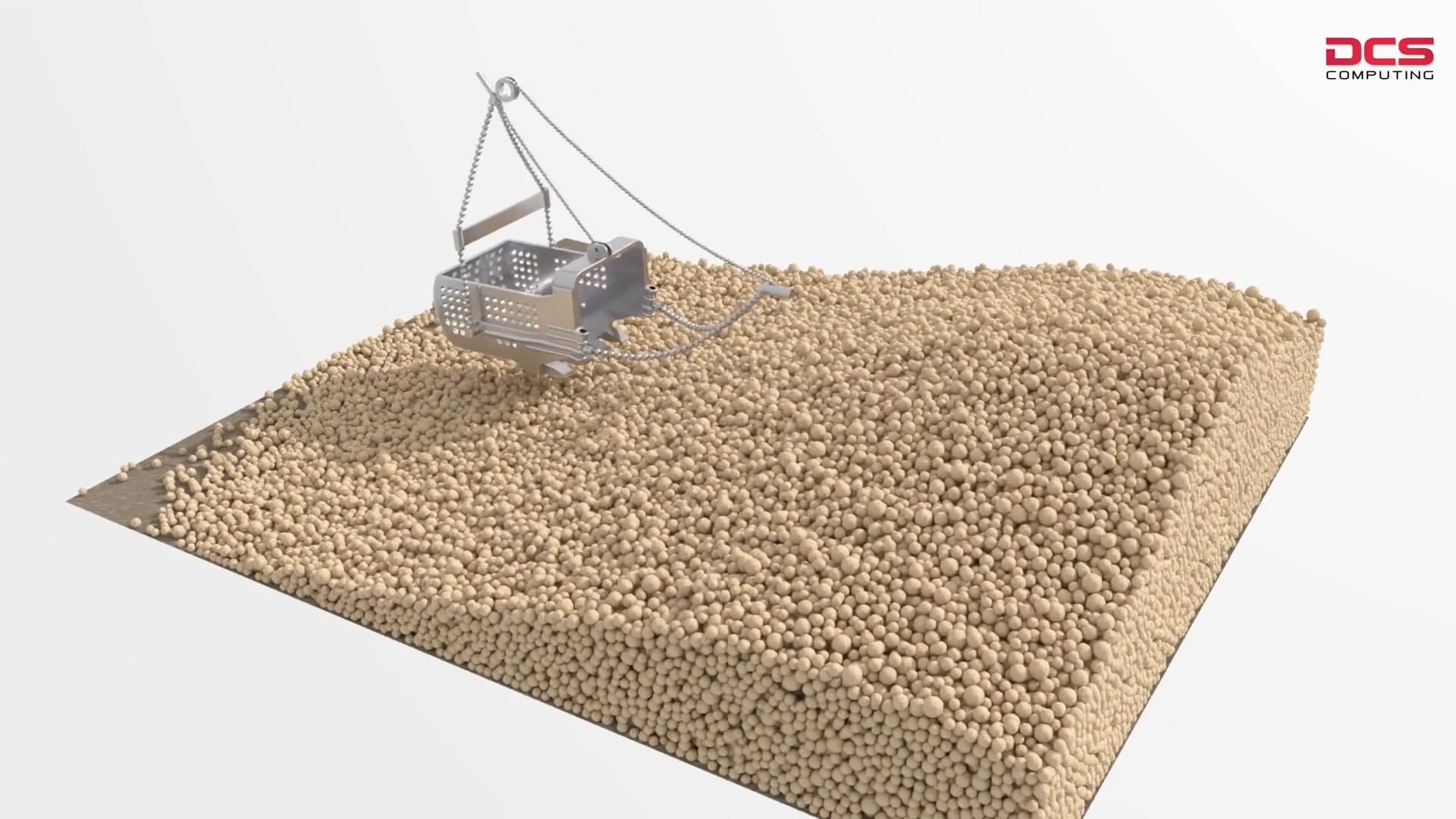
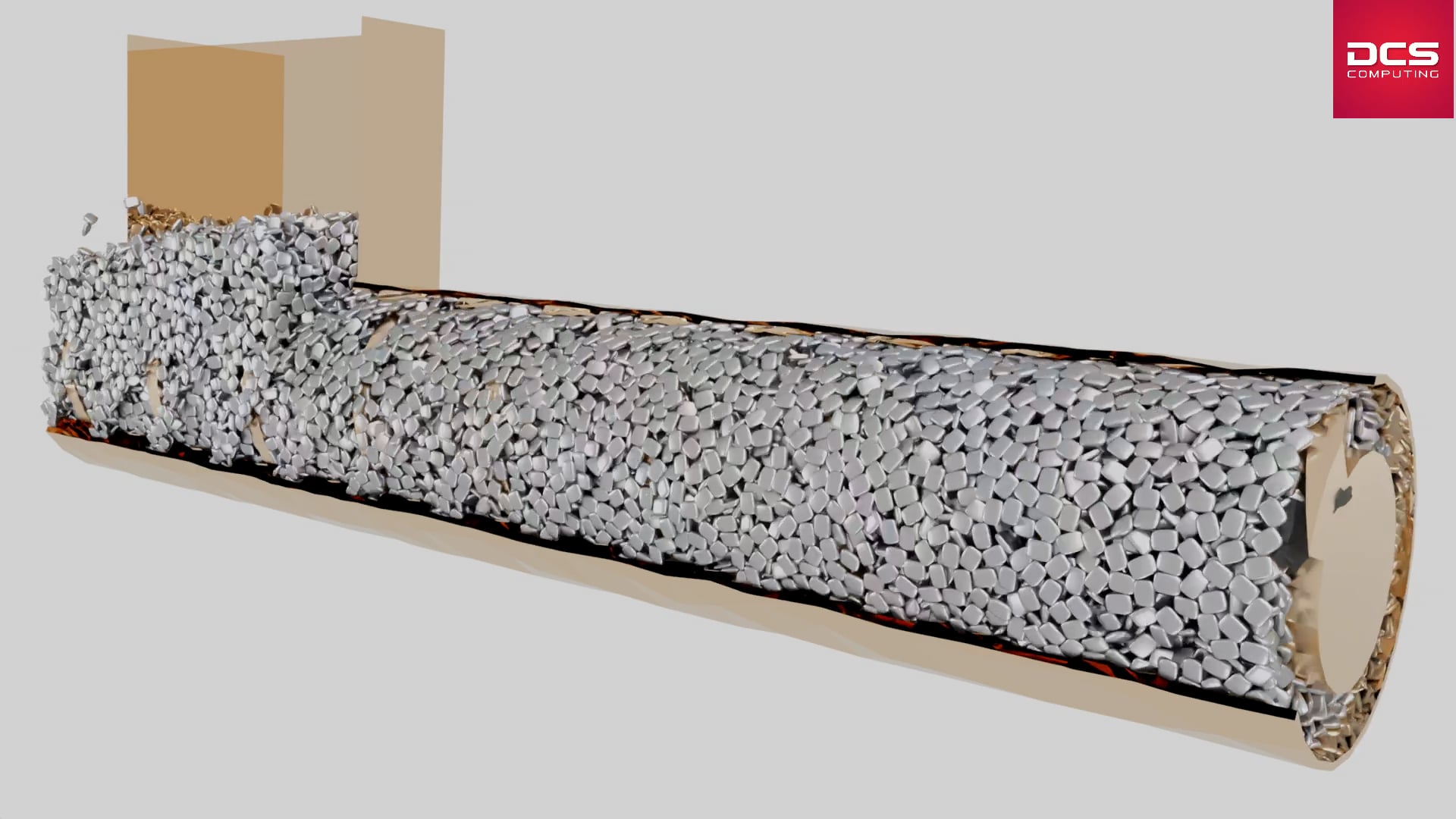
DEM simulations of a Liebherr dragline excavator, Finnie wear in a transfer chute and a ball mill liner, and a vibratory screener.
Aspherix® now offers local coarse-graining, allowing users to define coarse-graining settings individually for each particle template. This flexibility supports more accurate and efficient simulation of systems with mixed particle types. In CFDEM®coupling, drag models and heat transfer models (such
A new release brings several key improvements: a dedicated command now enables the calculation of temporal residuals for better monitoring of simulation convergence over time.
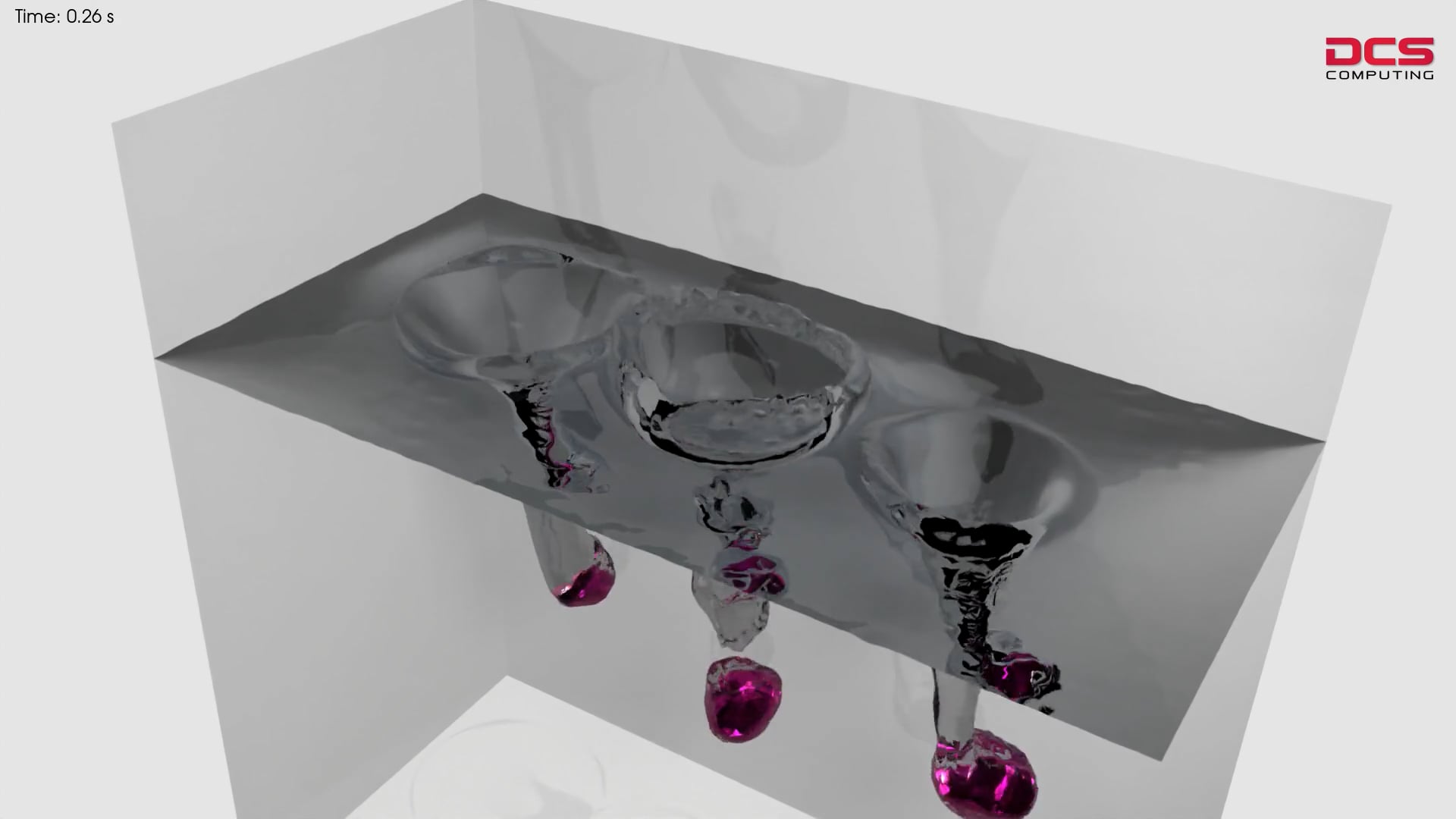
Modelling flat bentonite particles as spheres over-predicts how deep slurry infiltrates the soil. Flat particles build a filter cake near the surface.
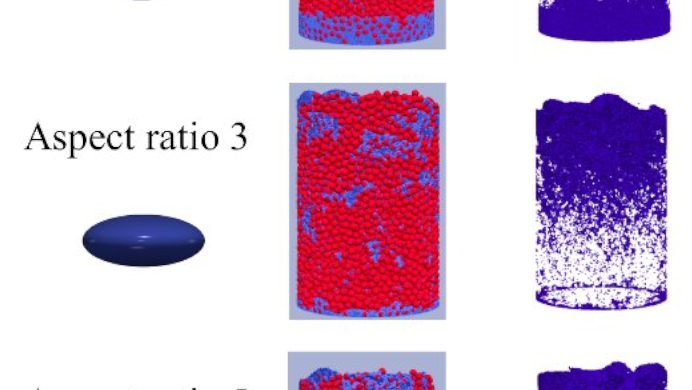
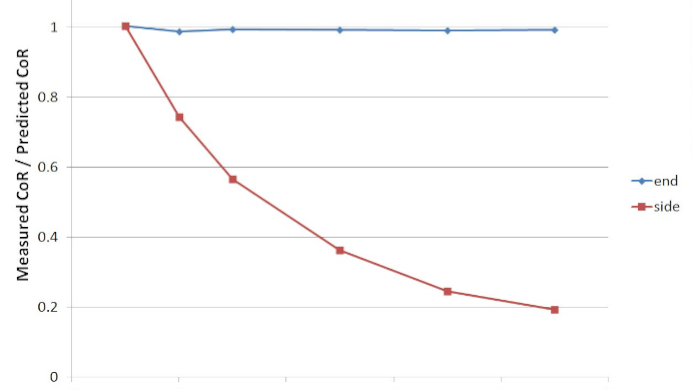
Three or more spheres reproduce the bulk behaviour of a spherocylinder in seven tests. More spheres damp multi-contact collisions and need a smaller time step.
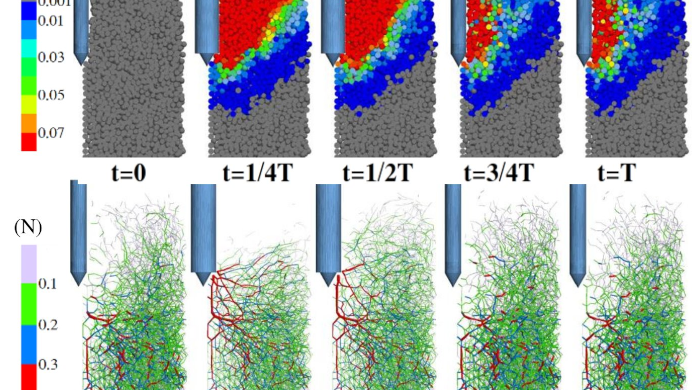
A virtual calibration chamber matches a documented cone penetration test, then shows why an expanding shaft makes penetration easier.
The IBMeshMotion module has been enhanced to support the use of Function1 objects for both linear and rotational movements, replacing the previous use of scalars.
A new and powerful way to define particle compositions has been introduced.
Modelling radiative heat transfer is now possible - an efficient distance-based approximation method has been implemented.
Missed a massflow-measurement or residence timecalculation in your simulation set up?