What's New in CFDEM®coupling 7.1.0?
CFDEM®coupling 7.1.0 release highlights: native GPU support, performance benchmarks, streamlined ease of use, and expanded validation and use cases.
Posts in Release Highlights
CFDEM®coupling 7.1.0 release highlights: native GPU support, performance benchmarks, streamlined ease of use, and expanded validation and use cases.
Aspherix® 7.1.0 release highlights: native GPU on Windows®, heat transfer inside particles, dynamic coarsegraining and built-in parameter calibration.
CFDEM®coupling 7.0.0 release highlights: reworked tutorials and documentation, new validation and use cases, and coarsegraining support for all force models.
Aspherix® 7.0.0 release highlights: a new GPU mode on Linux, the Roessler-Katterfeld combined wear model, and ohmic heating with nonspherical particles.
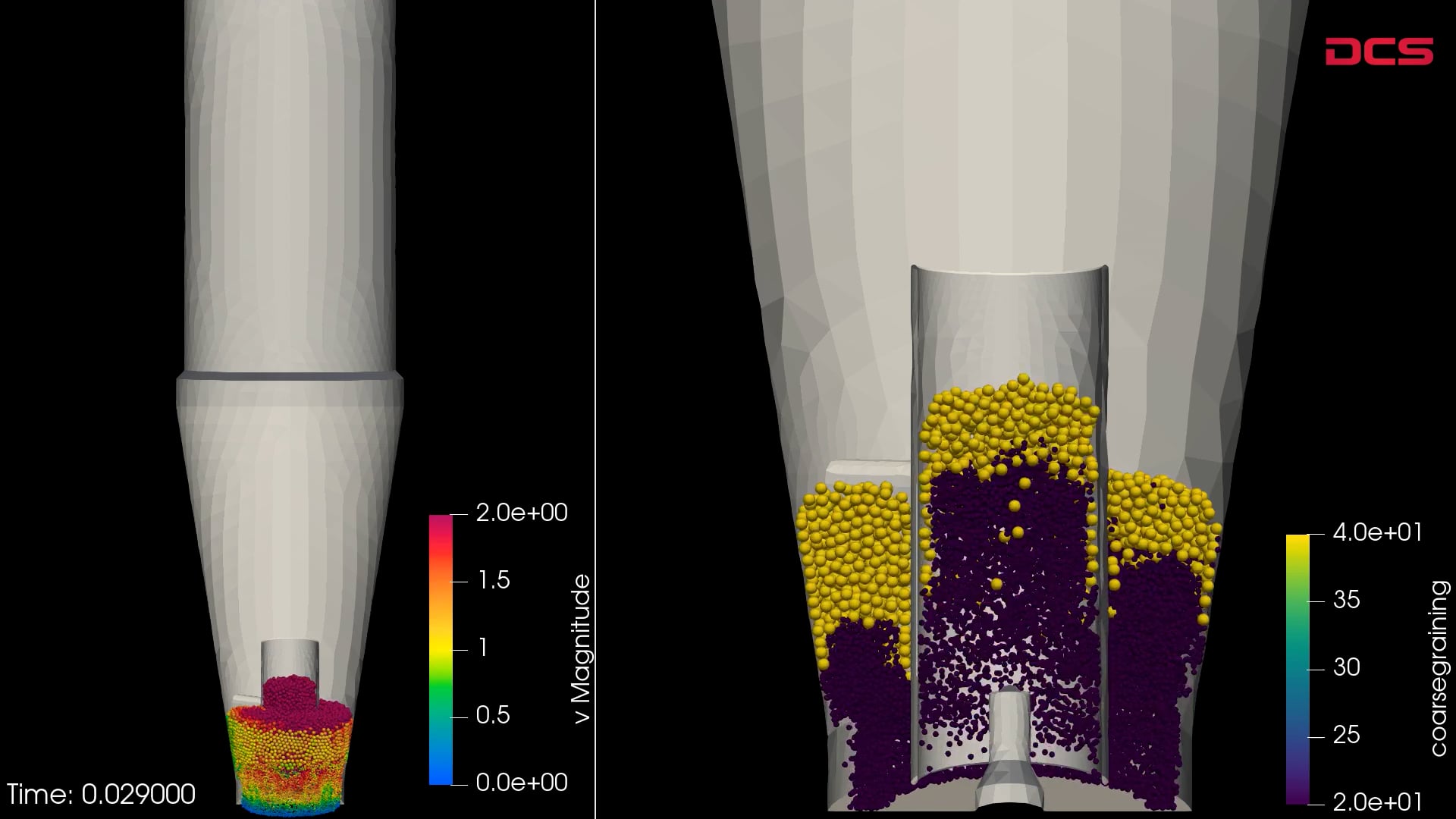
Aspherix® now offers local coarse-graining, allowing users to define coarse-graining settings individually for each particle template. This flexibility supports more accurate and efficient simulation of systems with mixed particle types. In CFDEM®coupling, drag models and heat transfer models (such
A new release brings several key improvements: a dedicated command now enables the calculation of temporal residuals for better monitoring of simulation convergence over time.
The IBMeshMotion module has been enhanced to support the use of Function1 objects for both linear and rotational movements, replacing the previous use of scalars.
A new and powerful way to define particle compositions has been introduced.
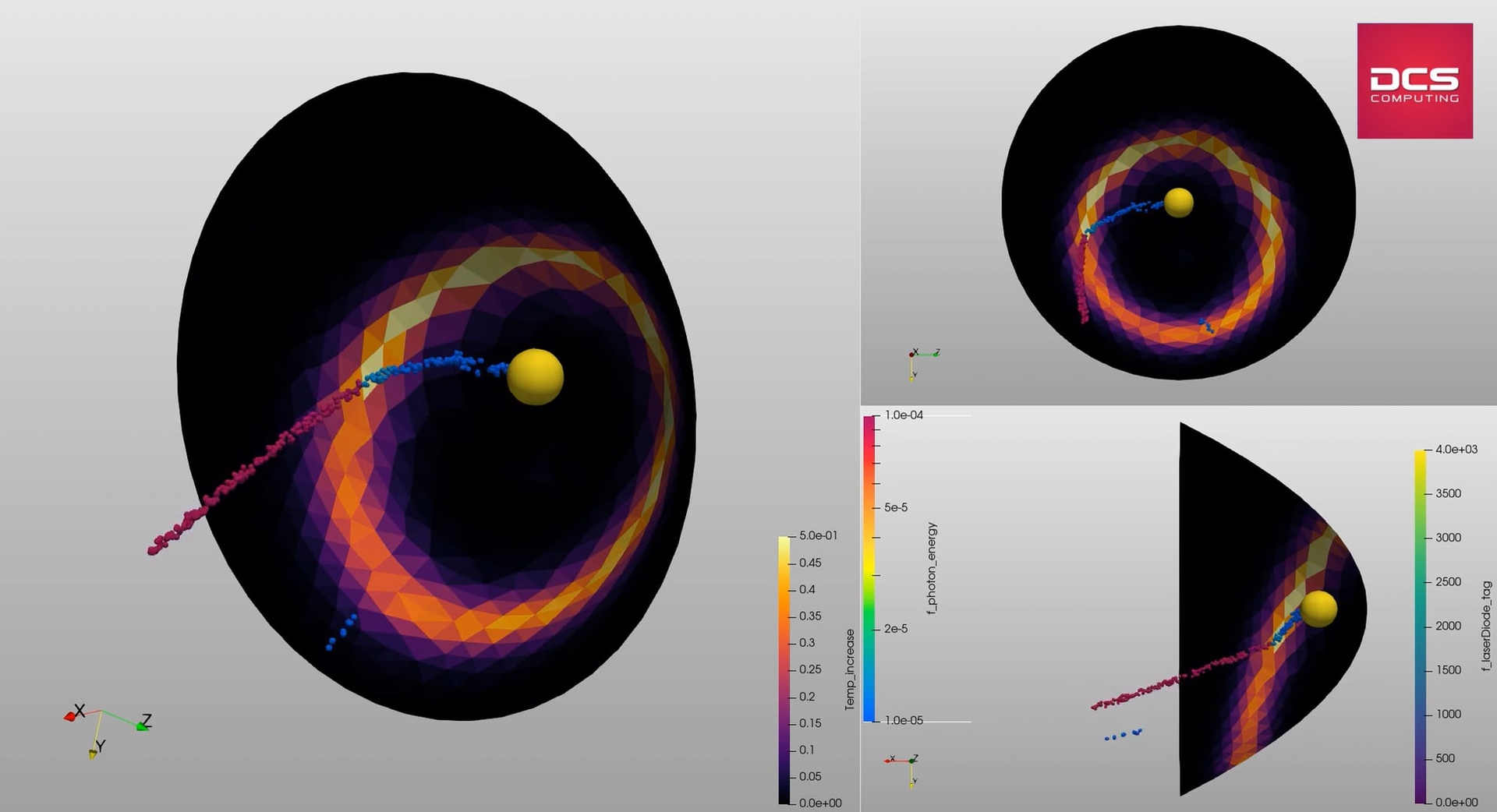
Modelling radiative heat transfer is now possible - an efficient distance-based approximation method has been implemented.
Missed a massflow-measurement or residence timecalculation in your simulation set up?
Lagrangian spray modeling is now accessible directly through the graphical user interface, streamlining setup and simulation of particle-laden flows. Usability has been further improved with the introduction of the custom_material_properties command, enabling more flexible material definitions. In a
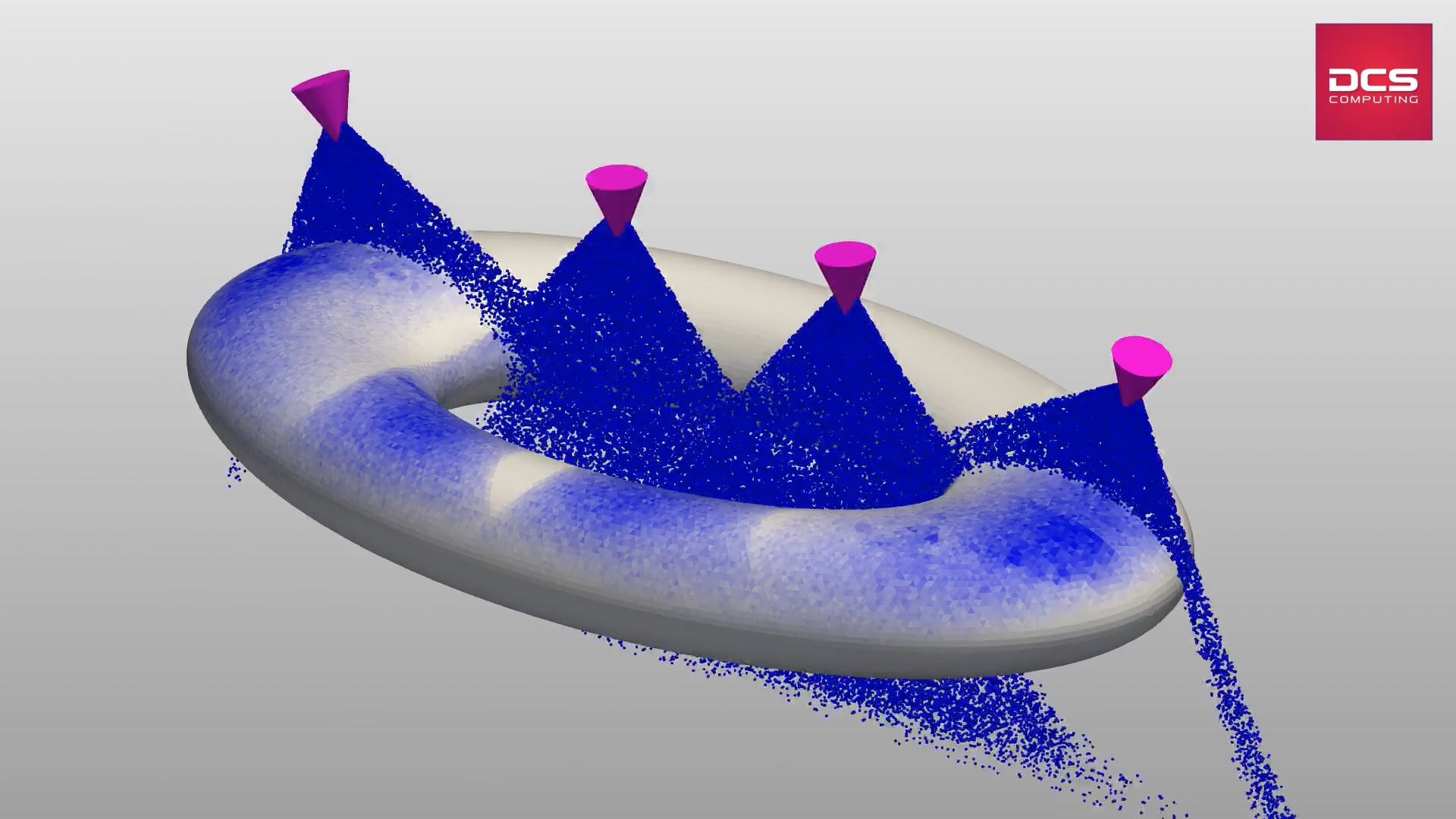
A new feature enables droplets to deposit liquid upon impact with a surface mesh. The deposited liquid is recorded using the liquidContent mesh property.